
Mozambique
2025 was marked by a sharp deterioration of the humanitarian situation in northern Mozambique. In Cabo Delgado, the armed conflict between Islamic State Mozambique (ISM), government and regional forces entered its 8th year. ISM attacks intensified in frequency and geographic reach, triggering repeated and large-scale population movements. For the first time in several years, attacks reached strategic urban centres such as Palma, while insecurity also spread into the neighbouring provinces of Nampula and Niassa.
Women and children represent a large proportion of those affected by the conflict and face heightened risks, including exposure to violence, abuse and exploitation, as well as barriers to care. Repeated displacement further disrupts livelihoods, social networks and continuity of treatment for people living with chronic conditions.

MSF Mozambique Operational Map Explorer
Select a region or district to view local project mapping and 2025 activity highlights.
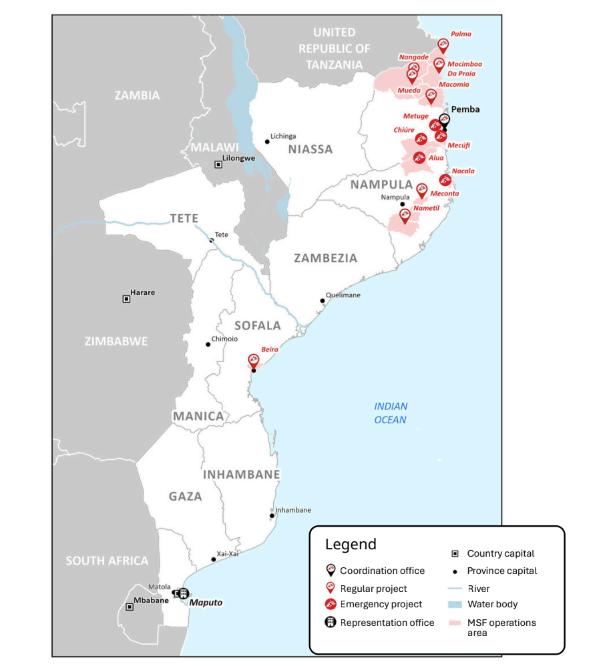
Mozambique Operations
Regular projects, emergency interventions and coordination hubs across Mozambique, responding to the combined effects of conflict, displacement and climate shocks.
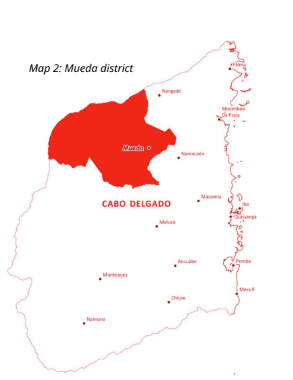
Mueda, Nangade & Muidumbe
MSF supported hospital and health centre services, community outreach and fully integrated mental health care across northern Cabo Delgado, before transitioning services to Ministry of Health leadership in 2025.
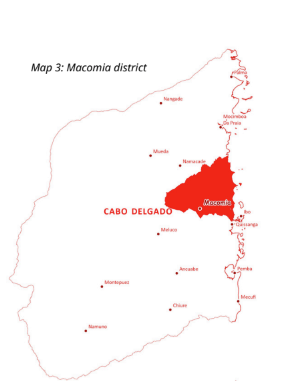
Macomia District
Activities resumed in March 2025 following the May 2024 attack, with services integrated at Macomia Health Centre, mobile clinics reaching remote villages and construction of an operating theatre under way.
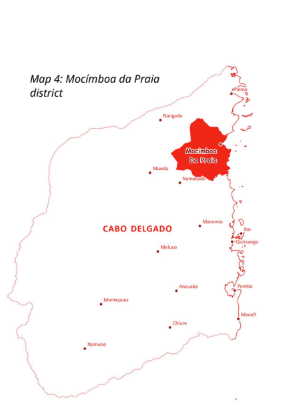
Mocímboa da Praia
Working alongside the MoH in three health centres and the district rural hospital, with integrated mental health care and emergency response in Nanili and Cooperativa displacement camps.
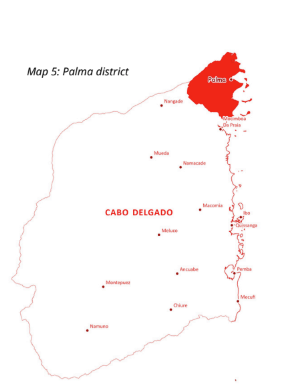
Palma District
Mobile clinics in Pundanhar, Nhica do Rovuma and Eduardo Mondlane sustained essential healthcare amid insecurity, alongside a Test and Treat campaign for HIV and TB launched in October 2025.
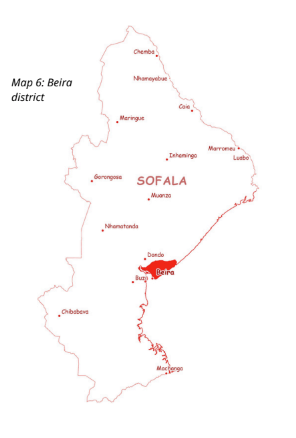
Beira District
Eleven years of community-centred HIV and sexual and reproductive healthcare for key populations concluded in 2025, with clinical activities handed over to the MoH and an operational research study on long-acting injectable PrEP (CAB-LA) ongoing.
Three waves of forced displacement
Over 300,000 people were displaced across northern provinces between late July and December 2025, driven by attacks and fear. MSF responded to each wave with emergency medical care, water and sanitation support and mental health services.

~50,000
people displaced
Attacks in Chiúre Velho triggered one of the largest sudden displacements of the year. Over six weeks, MSF provided 4,500+ consultations, 600,000 litres of clean water and mental health services to some 4,000 people in Chiúre Sede.
92,000+
people displaced
As violence intensified on the conflict's 8-year anniversary, around 23,000 people arrived in Mueda alone. MSF scaled up in three displacement camps and extended emergency support into Nanili and Cooperativa sites in Mocímboa da Praia.
100,000+
people displaced — two-thirds children
The largest wave of the year followed attacks in Memba district, Nampula. MSF's emergency response in Eráti district delivered 4,000+ consultations in one month — more than half for malaria, mostly in children under 14.
"When the attack happened, I was preparing my harvest for sale. Then we heard gunshots, and everyone started running. Now, my entire village is gone, everything is ashes."
Displaced woman from Ocua village
Climate shocks - A recurring, intensifying challenge
Cyclone Chido struck northern Mozambique in December 2024, causing 120 deaths and affecting over 400,000 people across Mecufi, Metuge and Chiúre districts and the city of Pemba. MSF's emergency response ran through early February 2025, prioritising continuity of essential health services, safe water and repairs to damaged health facilities. Two further cyclones — Dikeledi and Jude — followed in January and March, underlining that climate shocks are not isolated emergencies but structural drivers of humanitarian need.

Project highlights - Read about each district project
.
Mental health - A core component of humanitarian care
Throughout 2025, we integrated mental health and psychosocial services as a component of both regular healthcare activities and emergency responses. Interventions included psychological first aid, individual and group consultations, and community-based mental health activities. We also trained health staff and community agents to identify, manage and refer people with mental health needs. MSF teams observed a gradual increase in community awareness around mental health, with more people seeking care proactively and supporting identification and referral, despite persistent stigma.
There is still work to do to reduce barriers to access, limit stigma and ensure mental health care is recognised as an essential part of medical assistance. In a context marked by repeated and prolonged crises, addressing mental health needs is indispensable to alleviating suffering, supporting recovery and resilience. Mental health care is not an optional or complementary service, but a core component of our medical and humanitarian action.
Looking Ahead
msf.or.keWe remain committed to responding to evolving humanitarian needs in Mozambique, particularly in the north, where conflict, climate shocks and funding constraints continue to place immense pressure on communities and the health system.

- Try a different country, year, format, or topic.
- Clear one or more filters