
Conflict in Sudan
In the Heart of Conflict: A Harrowing Tale of Survival in War-Torn Sudan
The feeling of relief was immense, but so was the pain of what I had left behind. An overwhelming mix of exhaustion and gratitude. Article - 2 Aug 2024
War and conflict
Year in Review 2023
In 2023, our teams responded to many complex crises in over 70 countries Article - 19 Jun 2024
War and Conflict
Conflict in Sudan
On 15 April 2023, intense fighting erupted between the Sudanese Armed Forces (SAF) and the Rapid Support Forces (RSF) in Khartoum. The conflict has caused immense suffering. Millions of people have had to flee their homes and cross the borders to Chad, South Sudan, and other neighbouring countries. The majority, however, have remained in Sudan.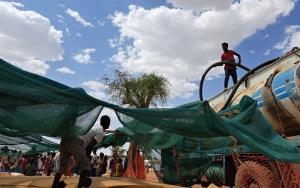
Water distribution
Bringing the water system back to life in Tigray, Ethiopia
“I’m the water man,” says Weldekiros Assefa, an engineer and water and sanitation expert for Doctors Without Borders (MSF) in Ethiopia. “I have the best job at MSF.” Project Update - 7 Aug 2023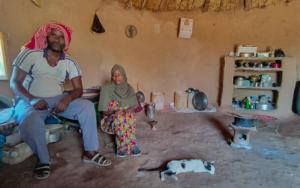
Refugees, Migration and displacement
"Now we are trapped in another conflict that makes it even harder to cope and survive": Refugees in Um Rakuba camp
Sudan is hosting more than one million refugees from neighbouring countries, such as South Sudan and Ethiopia, who fled violence and sought shelter. Unfortunately, they now find themselves trapped in another conflict that further hinders their ability to cope. Article - 10 May 2023
Kala azar
“We don’t know where it comes from but it kills a lot of people”
Kala azar is not only one of the most neglected tropical diseases, but also one of the deadliest. Since late 2022, MSF teams have been responding to an alarmingly high number of kala azar cases in south Omo valley, Ethiopia Article - 27 Mar 2023![MSF activities in Kule healthcare centre [Gabriella Bianchi/MSF]](/sites/default/files/styles/card/public/msfimages/news/msb145165_medium.jpg?itok=Th5Yfuea "MSF activities in Kule healthcare centre [Gabriella Bianchi/MSF]")
Access to Healthcare
At the same time, natural disasters pushed people’s coping mechanisms to their limits. Communities across the vastness of the Somali region experienced what is reported as the worst drought in forty years, and when floods struck the Gambella region, more than 180,000 people were displaced from their homes, and health facilities suffered extensive damage. Project Update - 27 Dec 2022
Treating people all across Ethiopia
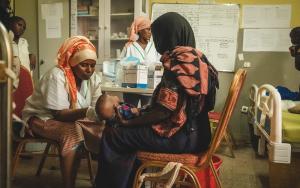
More than 22 million people were estimated to need humanitarian assistance in Ethiopia in 2022.1 Many faced the tragic consequences of conflict, particularly communities in the regions of Afar, Amhara, Tigray and Southern Nations (SNNPR).At the same time, natural disasters pushed people’s coping mechanisms to their limits. Communities across the vastness of the Somali region experienced what is reported as the worst drought in forty years, and when floods struck the Gambella region, more than 180,000 people were displaced from their homes, and health facilities suffered extensive damage. Project Update - 27 Dec 2022
Access to Healthcare
MSF raises alert over alarming indications of large-scale nutritional crisis in Ethiopia's Afar region
Many people in Afar cannot access the very minimum levels of healthcare, food and water necessary to sustain human life Press Release - 9 Jun 2022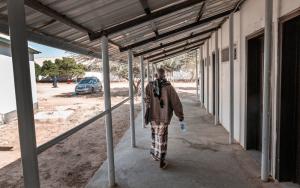
Access to Healthcare
Healing from DR-TB, despite long distances and numerous challenges
Treatment of drug-resistant TB can be extremely difficult - lasting up to 20 months for some patients and requiring daily trips to TB centers for medication Stories from the Frontline - 26 Apr 2022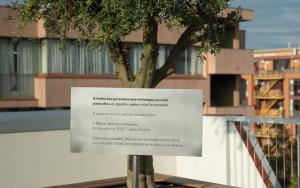
Access to Healthcare
On 24 June 2021, 35-year-old María Hernandez, our emergency coordinator; 32-year-old Yohannes Halefom Reda, our assistant coordinator; and 31-year-old Tedros Gebremariam, our driver, were travelling in the Tigray Region when we lost contact with them. On 25 June, their vehicle was found empty 100 to 400 meters away, their lifeless bodies.
Paula Gil, president for Médecins Sans Frontières/Doctors Without Borders (MSF) Spain explains what we know so far about the circumstances of their killings and what MSF has done to gain a better understanding of what happened. Crisis Update - 13 Jan 2022
Ethiopia: Still no responsibility established for the killing of MSF colleagues María, Tedros and Yohannes in Tigray
Six months after the murder of our three colleagues Maria, Tedros and Yohannes, the full circumstances of, and responsibility for, their killing remains unclear.On 24 June 2021, 35-year-old María Hernandez, our emergency coordinator; 32-year-old Yohannes Halefom Reda, our assistant coordinator; and 31-year-old Tedros Gebremariam, our driver, were travelling in the Tigray Region when we lost contact with them. On 25 June, their vehicle was found empty 100 to 400 meters away, their lifeless bodies.
Paula Gil, president for Médecins Sans Frontières/Doctors Without Borders (MSF) Spain explains what we know so far about the circumstances of their killings and what MSF has done to gain a better understanding of what happened. Crisis Update - 13 Jan 2022