Access to Healthcare
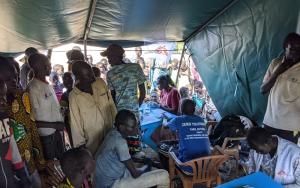
South Sudan: MSF treats over 100 wounded after renewed clashes in Jonglei-Pibor
This year MSF has witnessed extraordinary high levels of complex conflict and violence within the region Press Release - 19 Aug 2020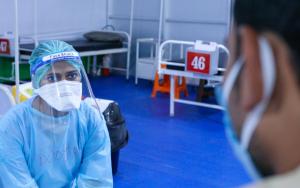
COVID-19 Coronavirus
to provide a transparent picture of our interventions, refl ect on some of the major challenges we faced, and share our best
practices in fi ghting this pandemic. We commit to reporting regularly on our activities related to the pandemic in the months
to come. Crisis Update - 13 Aug 2020
Responding to COVID-19: Global Accountability Report
By documenting the fi rst phase of MSF’s global COVID-19 response from the beginning of the year through May, we wantto provide a transparent picture of our interventions, refl ect on some of the major challenges we faced, and share our best
practices in fi ghting this pandemic. We commit to reporting regularly on our activities related to the pandemic in the months
to come. Crisis Update - 13 Aug 2020
Access to medicines
Access to coronavirus diagnostic tools is crucial to the response - An example from Cameroon
Five months after confirmation of a first case of coronavirus (COVID-19) in Cameroon, more is known about the disease. We now have a clearer understanding of how it has spread through the country and the correct response to it. To reach to this point, Médecins Sans Frontières/Doctors Without Borders (MSF) epidemiologists, who study and track the spread of diseases, have been essential. They have analysed needs and guided the response. Franck Ale, regional epidemiologist for MSF in Dakar, and Yap Boum, a representative of Epicentre, MSF’s epidemiology research centre, in Yaoundé, discuss the importance of diagnostic tools to tackle the pandemic. Project Update - 13 Aug 2020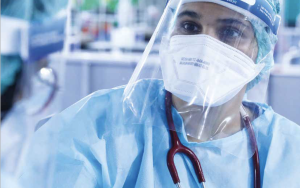
COVID-19 Coronavirus
Responding to COVID-19: Global Accountability Report | March - May 2020
Reports - 13 Aug 2020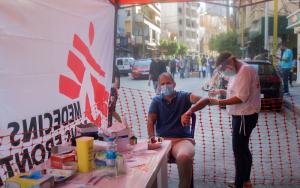
Access to Healthcare
Lebanon: MSF teams providing medical and mental health support to Beirut’s most affected communities
MSF is carrying out an emergency response to provide medical support to the people most impacted by the explosion in Beirut Crisis Update - 12 Aug 2020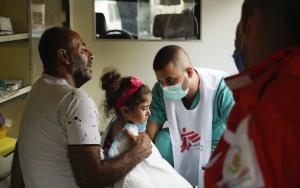
Access to Healthcare
MSF teams working to support Beirut’s health services in the aftermath of the blast
Two days later the death toll is still growing as more bodies are found under the rubble in Lebanon - 7 Aug 2020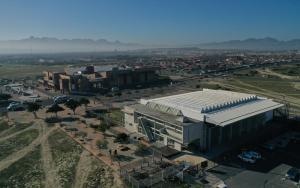
Access to Healthcare
South Africa: Western Cape begins to breathe after COVID-19 peak
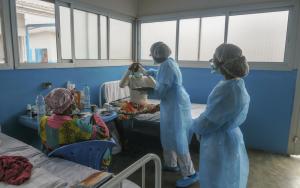
Opened beginning of June, MSFs Khayelitsha Field Hospital played a major role in helping the struggling Khayelitsha District Hospital to cope with the burden of COVID-19. Due to a decrease in admissions of people with COVID-19 at Khayelitsha district Hospital, and a slowdown in COVID-19 patients requiring hospital care across the City of Cape Town, MSF and the Department of Health have decided to scale down and close the facility by mid-August, with MSF now shifting focus to the Eastern Cape Province Project Update - 6 Aug 2020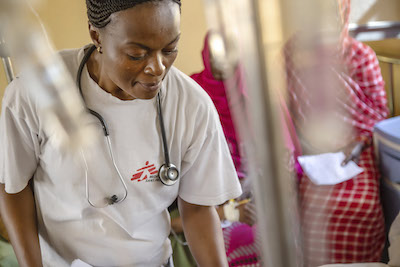
Médecins Sans Frontiéres
MSF Southern Africa cookies notice
We use “cookies” to identify you when you visit our website.
Doctors Without Borders (MSF)