1889 Results
 
Life in the Rohingya camps
Rohingya Refugee Crisis

Life in the Rohingya camps

In 2017, large forest areas were cleared to make way for shelters as more than 700,000 Rohingya fled violence in Myanmar and sought refuge in neighbouring Bangladesh. The foliage has now regrown, providing much needed shade in the heat of the densely populated camps, but it also marks eight years of separation from their homeland that the Rohingya have faced. Article - 29 Aug 2025
 
A staff member approaches the main door of MSF’s Mother and Child hospital in Houban, which is open 24 hours a day, seven days a week.
Access to Healthcare

Yemen: MSF hands over the mother and child hospital in Taiz Houban after a decade of lifesaving care

Since 2015, Doctors Without Borders/Médecins Sans Frontières (MSF) has operated the mother and child hospital in Al-Houban, Taiz governorate — one of the few facilities providing free, high-quality healthcare in a region deeply affected by more than a decade-long conflict. At the end of July 2025, after 10 years of service, MSF officially handed over the hospital to the Ministry of Health (MoH). Just before the handover, patients and the hospital equipment were moved to the new premises, jointly built by MSF and the MoH. Article - 28 Aug 2025
 
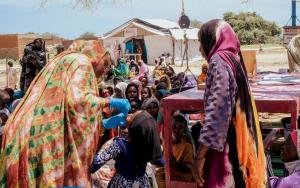
All new arrivals are housed in sheds while they wait to be allocated a family shelter. Larger families are given priority.
Access to Healthcare

Burundi: MSF's second emergency intervention for congolese refugees in Musenyi

Since the start of the year, tens of thousands of people have fled ongoing instability in the eastern Democratic Republic of the Congo (DRC), seeking refuge in neighbouring Burundi. In the south-east of the country, more than 17,000 refugees are currently living in Musenyi camp. Poor living conditions and limited access to healthcare have contributed to the spread of numerous illnesses, particularly malaria. Following an initial emergency response earlier in the year, Médecins Sans Frontières (MSF) launched a second intervention during the summer to improve the treatment of severe malaria and help prevent its transmission. Article - 28 Aug 2025
 
An MSF water truck provides a critical source of clean drinking water. Despite producing around 500,000 litres daily, it is enough for only 80,000 people to receive the bare minimum.
Gaza - Israel War

Gaza:People should not have to risk their lives for water

People should not have to risk their lives for water. We have repeatedly denounced this pervasive disregard for all human life in Gaza, and all necessities like water required to sustain human life Article - 27 Aug 2025
 
An MSF water truck provides a critical source of clean drinking water. Despite producing around 500,000 litres daily, it is enough for only 80,000 people to receive the bare minimum.
Gaza - Israel War

Israeli authorities starving Palestinians of water

Not only is there insufficient water overall for people in Gaza, but the reliance on water trucking means they do not have predictable methods to obtain what is available. Eighty six percent of Gaza is under forced displacement order by the Israeli military, making it unsafe for water trucks to attempt to reach people in those areas. The lack of adequate storage methods in households compounds the problems people face. Article - 21 Aug 2025
 
Andre Marcos, an MSF health promoter, assists with the triage of children in the waiting area at Micone temporary resettlement center in Chiure town, southern Cabo Delgado.
War and conflict

“This conflict feels endless”: Violence in Cabo Delgado,Mozambique sparks new wave of mass displacement as needs surge

Trapped between conflict and natural disasters, entire communities in Cabo Delgado have endured repeated displacement and ongoing trauma from the loss of their homes and livelihoods. Both displaced families and host communities are struggling to survive. If action is not taken immediately, there is a risk of an even greater humanitarian disaster. Article - 21 Aug 2025
 
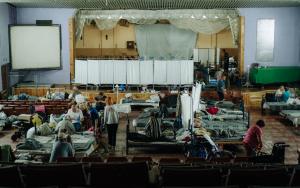
Internally displaced people gathered in an old school in Dali camp, Tawila, North Darfur, Sudan
Access to Healthcare

War fuels cholera outbreak across Sudan with MSF seeing over 2,300 patients and 40 dead in one week

In Tawila, people survive with an average of just three litres of water per day, which is less than half the emergency minimum threshold of 7.5 litres needed per person per day for drinking, cooking, and hygiene, as stipulated by the WHO. As cholera cases rise and resources run out, clean water and sanitation services are urgently needed to prevent more deaths. Article - 15 Aug 2025
 
Front entrance of the former MSF standalone hospital in Bentiu ex-PoC displaying a banner about the move to Bentiu State Hospital.
Access to Healthcare

South Sudan: In a shift towards sustainable healthcare in Unity State, MSF moves medical services to state-owned hospital after 10 years of care

Until 2024, when the transition began, MSF had conducted over 768,732 outpatient consultations, treated 257,793 patients for malaria, assisted with more than 3,810 deliveries, including 281 via caesarean sections, performed 7,491 surgeries and treated 5,282 children for malnutrition and 2,864 for measles. During this period, MSF also responded to numerous disease outbreaks and crises, such as cholera and hepatitis E. Article - 12 Aug 2025
 
Arrival of displaced civilians from besieged El-Fasher at the checkpoint at the entrance of Tawila
Refugee, migration and displacement

Sudan: Ongoing mass atrocities against civilians in and around El Fasher, North Darfur documented in latest MSF report

Based on MSF data, direct observations and over 80 interviews conducted between May 2024 and May 2025 with patients and people who were displaced from El Fasher and nearby Zamzam camp, the report exposes systematic patterns of violence that includes looting, mass killings, sexual violence, abductions, starvation and attacks against markets, health facilities and other civilian infrastructures Article - 12 Aug 2025